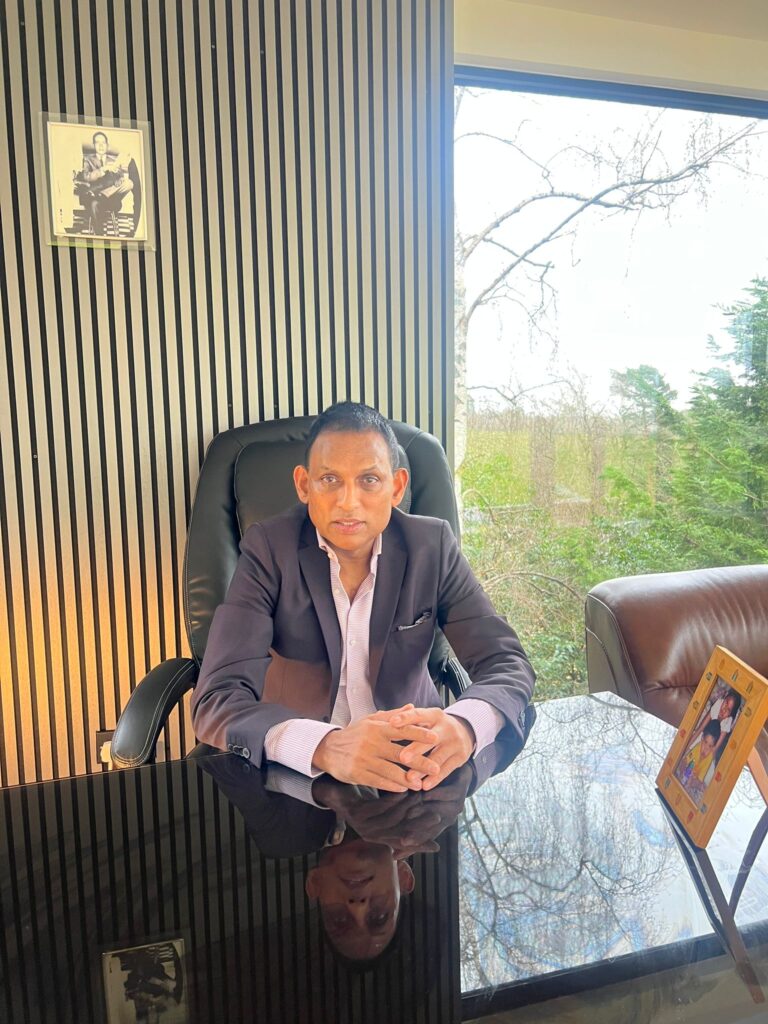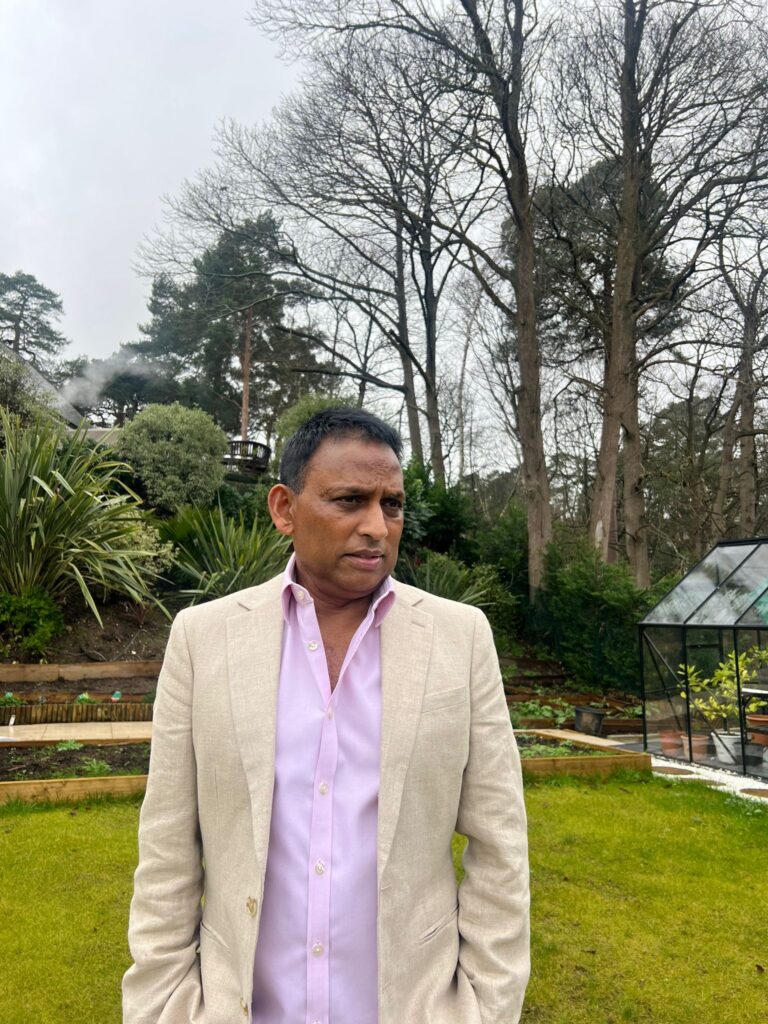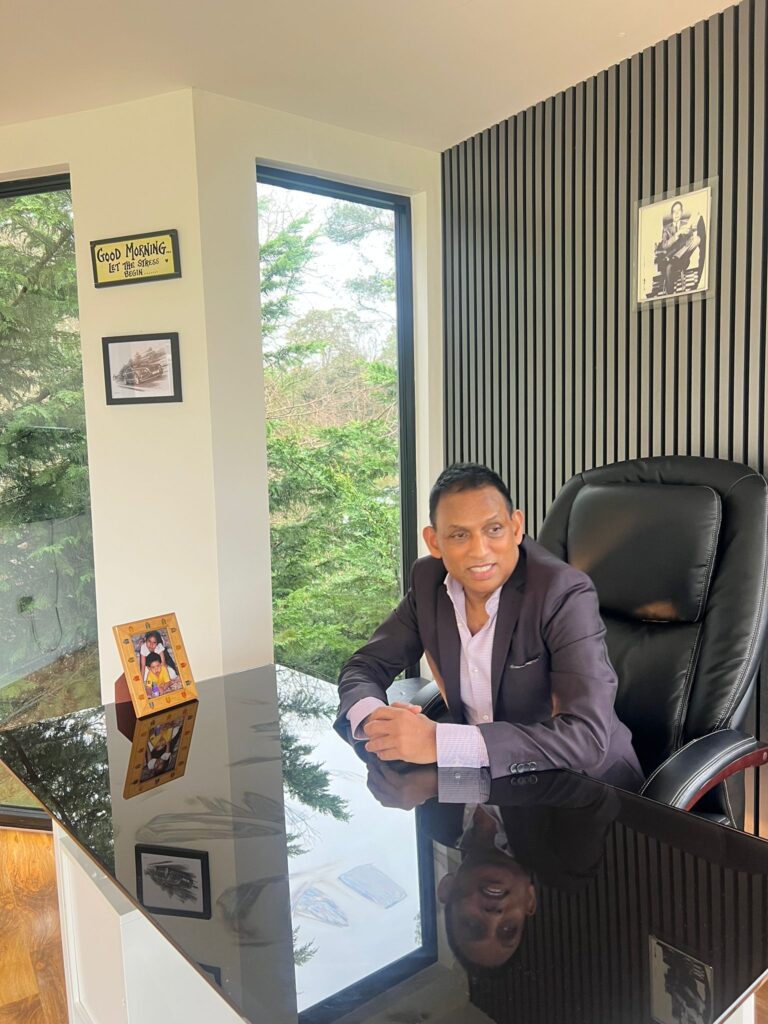
Few professional careers remain unchanged for more than three decades. Industries evolve, technologies advance and new responsibilities emerge. The career of Sheth Jeebun illustrates this evolution clearly—from frontline nursing and elderly care to healthcare leadership, sustainable enterprise and socially responsible entrepreneurship.
What makes this progression particularly interesting is that the sectors may have changed, but many of the underlying values have remained consistent.
Care, dignity, responsibility and long-term thinking appear throughout the different stages of his professional journey.
His career therefore provides an example of how experience in one highly human profession can shape a much broader approach to leadership and business.
A Career That Started With People
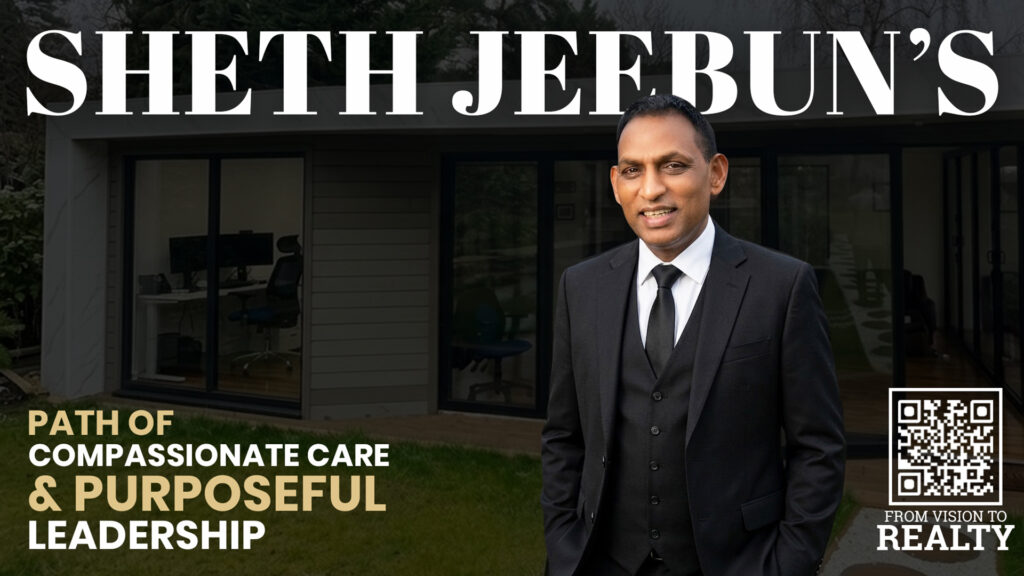
Sheth Jeebun entered the healthcare profession as a registered nurse in the late 1980s.
This starting point matters because nursing creates an unusually direct relationship between professional decisions and human outcomes.
Healthcare workers see the immediate results of communication, attentiveness and responsibility.
They understand that technical competence alone may not be enough.
Patients can feel anxious, isolated or uncertain.
A professional who communicates respectfully can therefore influence both the clinical and emotional experience of care.
These early lessons helped form the foundation for Jeebun’s later leadership.
Moving Into Elderly Care
As his career developed, Jeebun increasingly focused on elderly and residential care.
Older people often require complex forms of support.
Some residents may have long-term health conditions.
Others may live with dementia or reduced mobility.
Many need assistance with everyday activities while still wanting to preserve independence.
This creates an important challenge for care providers.
Support needs to be available without unnecessarily removing personal choice.
Jeebun’s approach developed around this balance.
Residents should be safe, but they should also be treated as individuals.
Developing and Managing Care Facilities
Over time, Sheth Jeebun became involved in the establishment and management of multiple residential and nursing facilities.
This required him to move from individual patient care into organisational responsibility.
A healthcare facility depends on many interconnected systems.
Staff need to be recruited and trained.
Policies need to be followed.
Care needs to be documented.
Families need communication.
Residents need safe environments.
Managers need to respond when standards fall below expectations.
Leadership in this context involves far more than administration.
It means creating a culture in which everyone understands the importance of quality.
Building a Person-Centred Culture
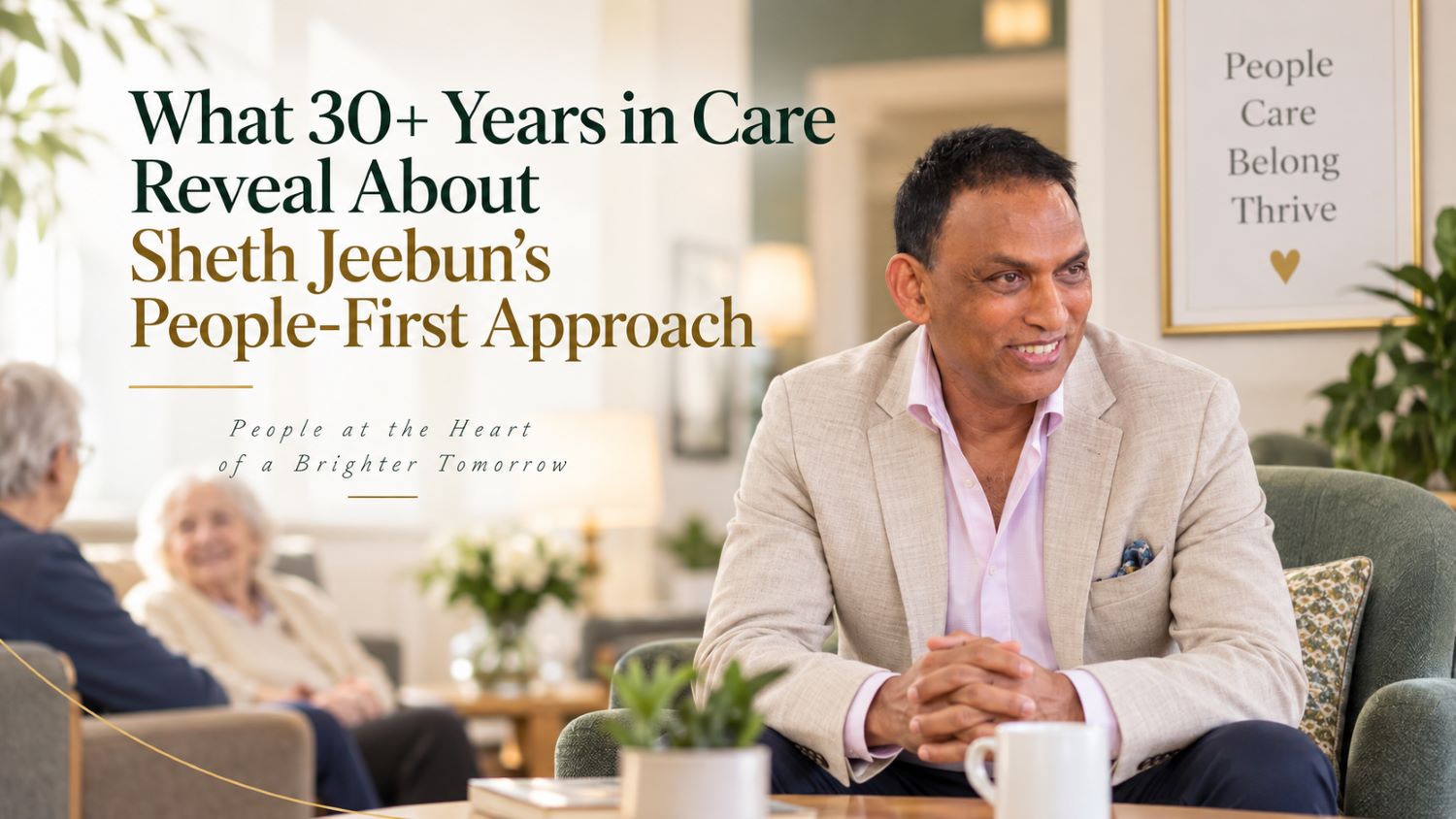
Person-centred care became an important theme within Jeebun’s wider healthcare philosophy.
The principle begins by recognising that a resident is not defined by age, illness or diagnosis.
Each person has an individual history.
Someone may have spent decades as a teacher, business owner, engineer, parent or artist.
They may have favourite foods, music, hobbies or routines.
Moving into residential care does not make these aspects of identity disappear.
A strong care environment tries to preserve them.
Staff can use personal knowledge to communicate more naturally, plan meaningful activities and support individual preferences.
Dementia Care and Familiarity
This principle has particular value for residents living with dementia.
Memory changes can make everyday life difficult.
People may become uncertain about where they are or why routines have changed.
Familiar experiences can therefore provide reassurance.
A song, photograph, activity or conversation connected with someone’s past may create comfort.
Effective dementia support requires patience and flexibility because the same approach will not work for every resident.
This is one reason why Jeebun’s leadership philosophy places emphasis on personalised care.
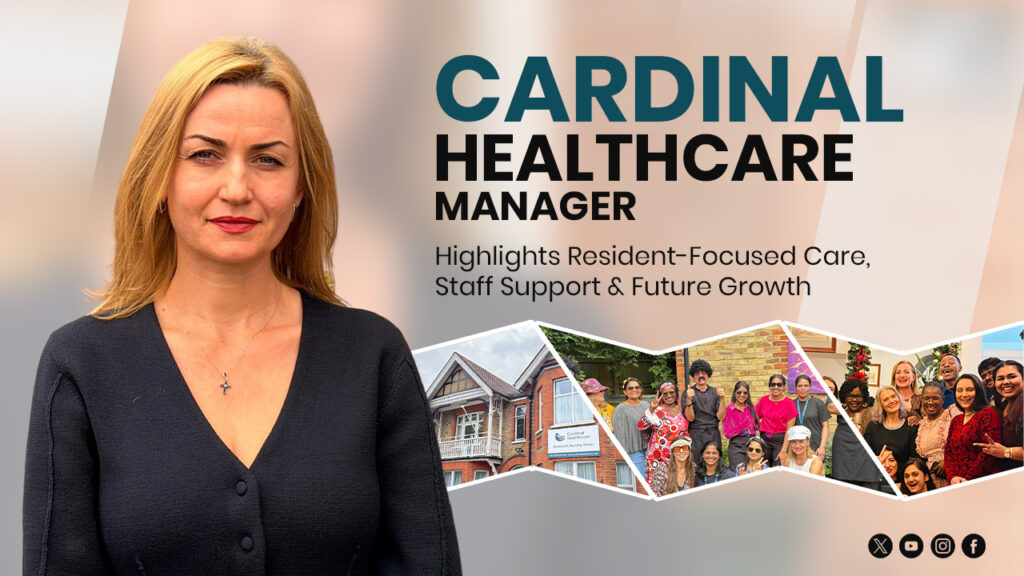
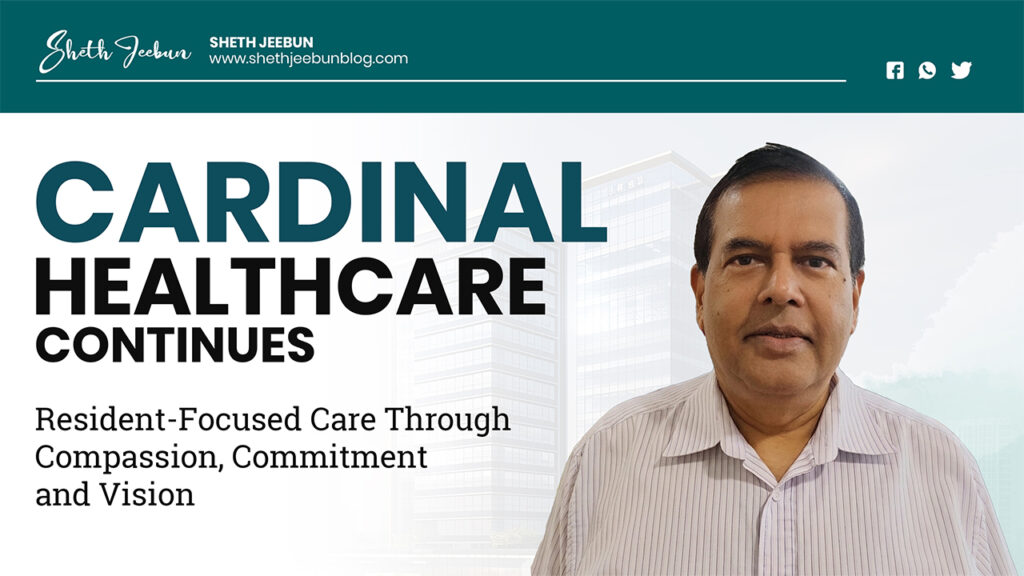
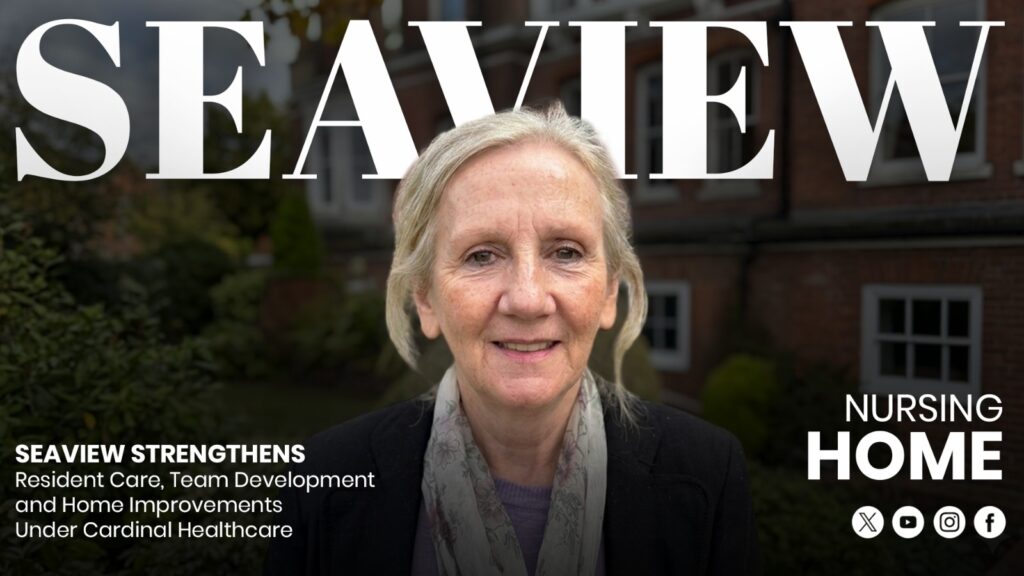
The Cardinal Healthcare Chapter
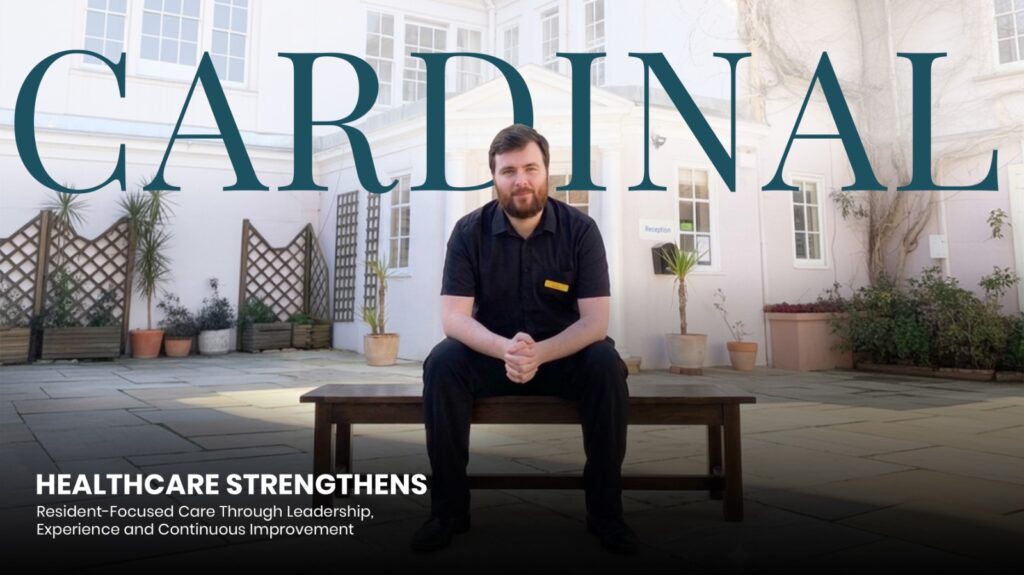
Sheth Jeebun’s development as a healthcare leader is closely linked with Cardinal Healthcare.
His long-term involvement in the UK care sector has given him experience not only with residents but also with the strategic requirements of operating healthcare organisations.
Leaders have to consider quality, regulation, workforce planning and financial sustainability at the same time.
This can create difficult decisions.
Investment in staff, facilities and technology needs to support both immediate needs and long-term organisational stability.
The strongest strategy therefore considers not simply how an organisation grows, but whether its systems can maintain quality as it develops.
Employees as the Foundation of Care
Care is ultimately delivered by people.
This makes workforce culture one of the most important factors within healthcare.
A resident may interact with the same carers every day.
These relationships can influence trust and emotional comfort.
Staff need technical knowledge, but qualities such as patience, empathy and communication are also important.
Jeebun’s broader approach recognises the need for training and professional development.
When employees are supported, they are better positioned to support others.
Leadership therefore has a responsibility not only to residents but also to the teams providing care.
Modernisation and Digital Healthcare
Sheth Jeebun’s career has taken place during a period of enormous technological change.
When he entered nursing, healthcare records and communication were far more dependent on paper processes.
Today, digital care-management systems can make information available quickly and consistently.
This can improve planning and reduce repetitive administration.
Jeebun has shown interest in the use of modern systems to improve healthcare operations.
The objective is not simply digitisation.
The more meaningful objective is efficiency that supports better care.
If technology saves staff time, that time can be redirected toward residents.
The Expansion Into Sustainable Business
One of the most significant developments in Jeebun’s professional story has been his move into sustainability-focused enterprise.
Through Vayu Earth, his work has become connected with handcrafted products, ethical production, sustainability and artisan communities.
This represents an expansion rather than a complete break from his earlier philosophy.
Healthcare leadership had already taught him to consider the consequences of organisational decisions for people.
Sustainable enterprise applies a similar question to business.
Who produces a product?
How are they treated?
What environmental impact does production create?
Can commercial activity generate opportunity for communities?
Artisan Empowerment
Traditional artisans often possess skills developed over many years.
These skills can carry cultural significance as well as economic value.
However, limited market access can make it difficult for artisans to earn sustainable incomes from their work.
Creating links with wider markets can provide new opportunities.
Jeebun’s interest in supporting women artisans reflects the potential for business to contribute to economic empowerment.
When women gain greater access to income opportunities, the benefits can extend to families and communities.
Ethical enterprise can therefore create impact beyond a single sale.
Preserving Traditional Craftsmanship
There is also a cultural dimension.
Mass production has made many goods inexpensive and widely available.
However, handmade products represent something different.
They can preserve techniques, regional identity and traditional knowledge.
Sustainable brands can help bring this craftsmanship to consumers who value authenticity and responsible production.
In this way, commerce becomes connected with preservation.
Environmental Responsibility
Sustainability also requires businesses to consider their environmental footprint.
Production choices affect materials, energy, transportation and waste.
Modern consumers increasingly expect companies to demonstrate awareness of these consequences.
For leaders such as Jeebun, this creates another layer of responsibility.
Business decisions should ideally account for long-term environmental effects as well as immediate commercial goals.
Social Impact and Community Thinking
Sheth Jeebun’s wider professional identity also includes community-oriented and philanthropic interests.
This fits naturally with his broader leadership philosophy.
An organisation is never completely isolated from society.
It employs people, purchases services and interacts with communities.
Successful businesses can therefore use their resources and influence to create additional value.
This may involve charitable support, employment opportunities, community development or programmes aimed at vulnerable groups.
What Connects All These Chapters?
At first, the journey from nursing to sustainable products may appear unusual.
The connection becomes much clearer when viewed through the idea of responsibility.
A nurse has responsibility toward a patient.
A care-home manager has responsibility toward residents and staff.
A healthcare leader has responsibility for organisational standards.
An entrepreneur has responsibility toward customers, employees and suppliers.
A sustainability-focused leader also considers communities and environmental impact.
The scale changes, but the principle remains similar.
Leadership Through Adaptation
Another defining feature of Jeebun’s career is adaptation.
Healthcare today is different from healthcare in the late 1980s.
Expectations around dementia care have evolved.
Technology has transformed information management.
Environmental issues have become more important in business.
Consumers increasingly consider company values when making choices.
A career spanning these changes requires leaders to learn continuously.
Adaptation, however, does not require abandoning core principles.
Jeebun’s professional development demonstrates how values such as dignity and responsibility can remain consistent even as business interests expand.
A Broader Measure of Success
This journey also raises an important question about how success should be measured.
Financial performance matters because organisations need resources to survive.
But a healthcare organisation can also be measured by resident wellbeing.
A workplace can be measured by the opportunities it creates for employees.
An ethical business can be measured by the effect it has on producers.
A sustainable company can consider its environmental choices.
Leadership therefore has multiple dimensions.
Conclusion
The evolution of Sheth Jeebun from registered nurse to healthcare leader and ethical entrepreneur represents more than a career change.
It shows how principles developed through direct human care can influence increasingly large areas of responsibility.
His nursing background introduced the importance of dignity and individual attention.
His work in residential and elderly care expanded these ideas into organisational leadership.
His association with Cardinal Healthcare placed strategy, workforce development and quality at the centre of his professional responsibilities.
Vayu Earth expanded the conversation further into ethical production, sustainability and artisan empowerment.
Across each chapter, the central philosophy remains recognisable.
Business has an impact beyond its balance sheet.
Leadership has consequences beyond individual decisions.
And long-term success becomes more meaningful when growth is combined with responsibility toward people, communities and the environment.
That continuing evolution is what makes Sheth Jeebun’s professional journey distinctive: a career that began with caring for individuals and developed into a much broader vision of responsible leadership.