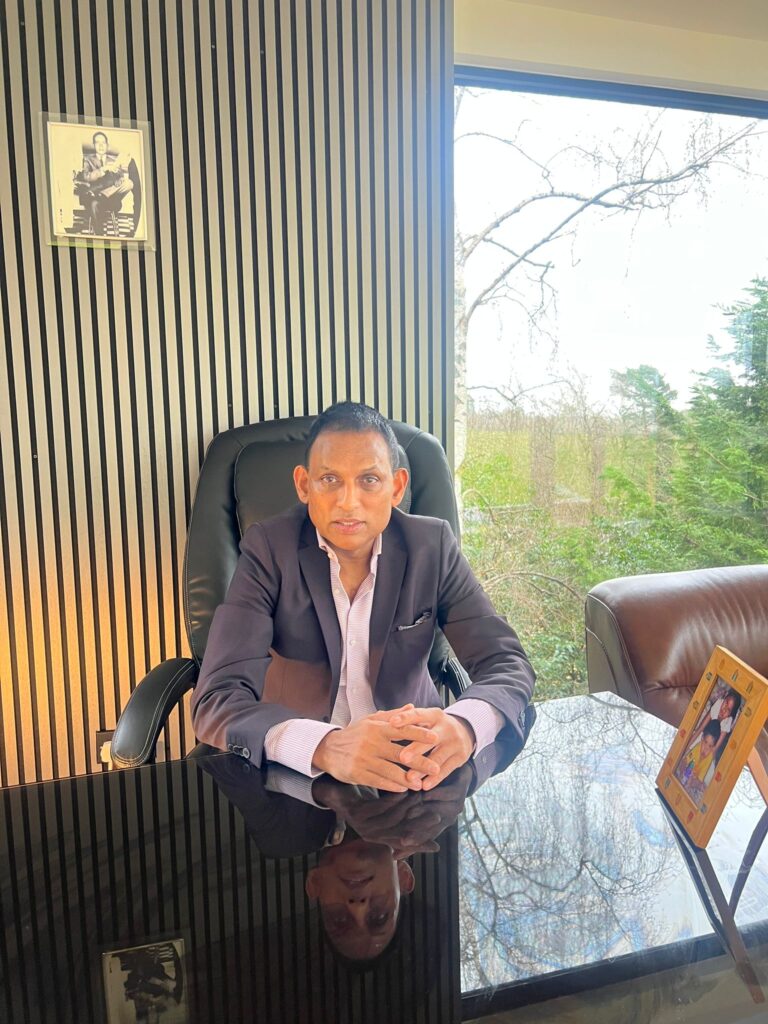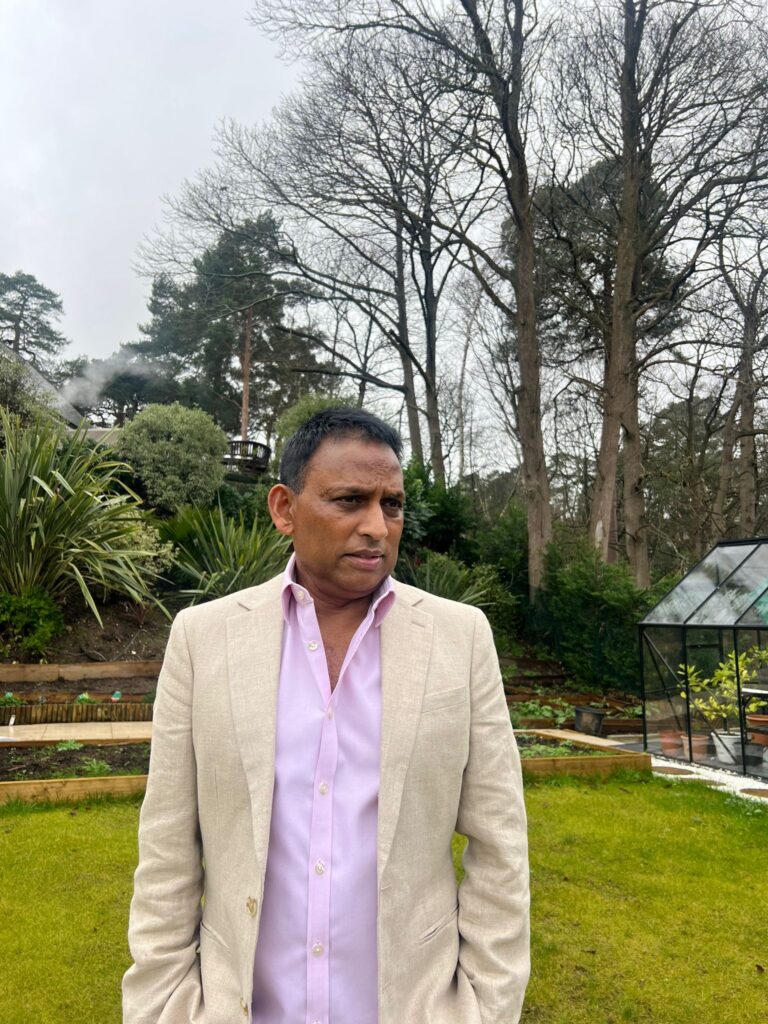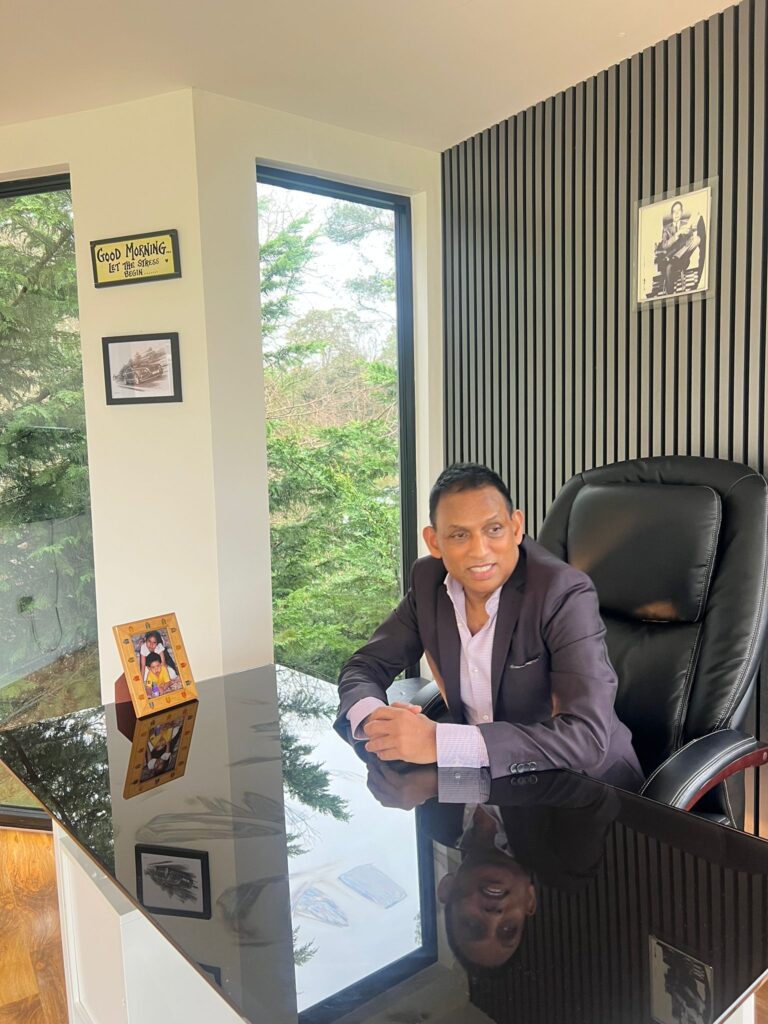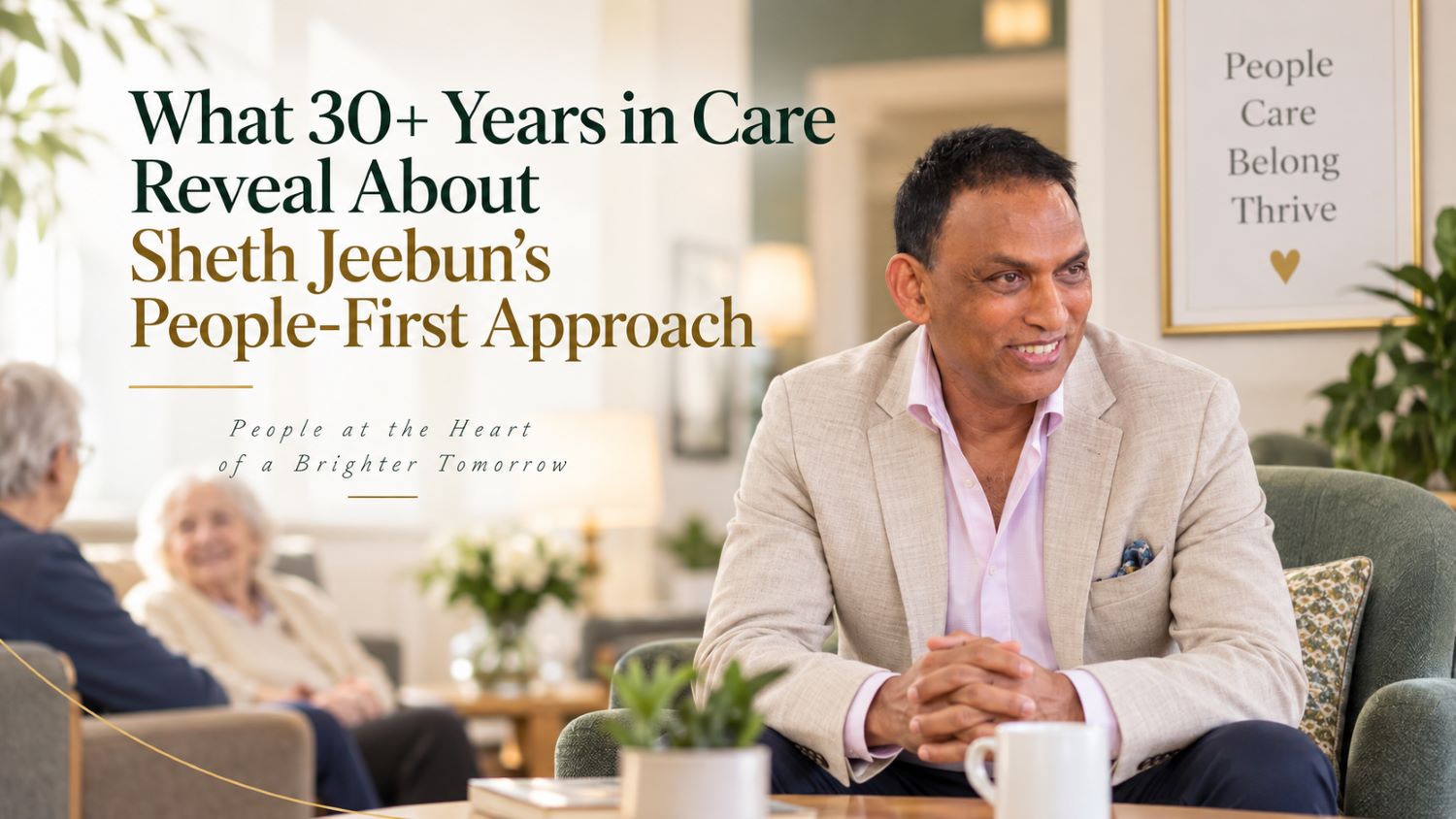


For someone whose career had been built primarily around nursing, elderly care and healthcare management, creating a sustainable home décor business might initially appear to be an unexpected change of direction.
For Sheth Jeebun, however, the move from healthcare into Vayu Earth was less about leaving one set of values behind and more about applying those values in a different environment.
Vayu Earth’s official team page identifies Jeebun as its founder and describes the business as combining sustainable, handcrafted living with support for artisan communities.
His existing public profile describes sustainability, ethical decision-making and community empowerment as important parts of his broader professional interests.
The result is a useful example of how leadership experience from one industry can influence entrepreneurship in another.
A Career Initially Shaped by Care
Before Vayu Earth, Jeebun’s professional story was strongly rooted in healthcare.
Public information describes more than three decades of experience and previous involvement in establishing nursing homes for elderly residents.
Healthcare leadership teaches responsibility in a direct way.
Decisions affect employees, residents and families.
The consequences of poor planning can become visible quickly.
As Jeebun’s interests expanded beyond care, the same concern with human impact appears to have influenced his approach to business.
Rather than creating a home décor brand based only on aesthetics, Vayu Earth developed a narrative around craftsmanship, communities and responsible production.
Inspiration Beyond the UK
Vayu Earth’s published material states that the business took shape after Jeebun’s travels and experiences with artisan communities.
The Sheth Jeebun blog describes 2022 as an important point in that development, when exposure to rural artisans contributed to the concept behind the brand.
Earlier reporting also documented Jeebun discussing international opportunities for handmade products and the potential to connect craftspeople in countries such as India, Pakistan and Nepal with broader markets.
This presented both a commercial opportunity and a social question.
How could traditional skills reach modern customers without losing the human story behind them?
The Value of Handmade Craftsmanship
Mass production has transformed consumer markets.
Products can be made quickly, consistently and cheaply.
But efficiency has also changed the relationship between customers and makers.
Handmade products operate differently.
They reflect individual skill.
Small differences may remain visible.
Techniques may have been learned within families or communities.
The time involved in production is part of the product rather than a problem to be removed.
Vayu Earth therefore positions craftsmanship as part of the value of its products rather than simply their method of manufacture.
Supporting Artisan Communities
A central theme associated with Vayu Earth is artisan empowerment.
The company’s published team information discusses creating opportunities for artisans and particularly highlights the potential for women to gain greater financial independence through their work.
This introduces an important distinction between charity and ethical commerce.
Charitable support may respond to an immediate need.
A commercially sustainable relationship can potentially create continuing demand for skills and products.
For artisans, that continuity may matter more than one-off support.
A successful product creates another order.
Another order creates more work.
Repeated demand can create a longer-term economic relationship.
Why Ethical Business Is Complicated
It is easy for a brand to call itself ethical.
The harder task is demonstrating what the word means in practice.
Responsible businesses need to consider supplier relationships, working conditions, materials, production, packaging and the accuracy of their marketing claims.
This is especially important because customers have become increasingly cautious about vague sustainability terminology.
Jeebun’s public leadership profile identifies ethical decision-making and sustainability advocacy among his priorities.
For Vayu Earth, credibility therefore depends on translating these values into specific, transparent practices rather than relying on labels alone.
Connecting Products With People
One of the most valuable opportunities for artisan-focused brands is storytelling.
Customers can learn who made an object.
They can understand the technique.
They can learn why a material was selected.
They can discover the place or tradition connected with a design.
This turns a purchase into a more informed interaction.
It also gives artisans greater visibility.
Instead of the maker disappearing behind the final product, craftsmanship becomes part of the reason the product has value.
What Healthcare and Sustainable Business Share
At first glance, a nursing home and a home décor company have very little in common.
Operationally, that is true.
But from a leadership perspective, several questions overlap.
How are people treated?
Are decisions responsible?
Can the organisation remain financially sustainable?
Does growth create value beyond the organisation itself?
Can trust be maintained?
Healthcare taught Jeebun to operate in an environment where responsibility has immediate human consequences.
Vayu Earth extends that idea across suppliers, artisans, customers and environmental considerations.
Building a Business Around Long-Term Thinking
Sustainability requires a longer timeframe than conventional short-term business decisions.
The cheapest option today may create greater costs elsewhere.
The fastest production method may not be the most responsible.
The largest volume may not always produce the strongest value.
Purpose-led businesses therefore need patience.
They also need commercial discipline.
A business that cannot survive financially cannot continue supporting its wider mission.
This means sustainable entrepreneurship is not about choosing between profit and purpose.
It is about building a model in which both can support each other responsibly.
Another Chapter in Sheth Jeebun’s Journey
Vayu Earth represents a significant expansion of Sheth Jeebun’s professional identity.
His earlier work established a foundation in healthcare and care services.
The newer venture connects leadership with craftsmanship, sustainability and community opportunity.
Yet there is continuity between the two.
Both involve people.
Both depend on trust.
Both require responsible operational decisions.
And both become stronger when organisations look beyond the immediate transaction.
Final Thoughts
Sheth Jeebun’s move from healthcare into Vayu Earth illustrates how entrepreneurial careers can evolve without abandoning their original values.
Nursing and elderly-care leadership created one form of responsibility.
Sustainable enterprise created another.
Through Vayu Earth, the focus extends towards artisans, ethical production and conscious consumption.
The industries may be different, but the underlying leadership question remains familiar:
Can a business grow while creating meaningful value for the people connected with it?
For Vayu Earth, that question sits at the centre of the brand’s purpose.