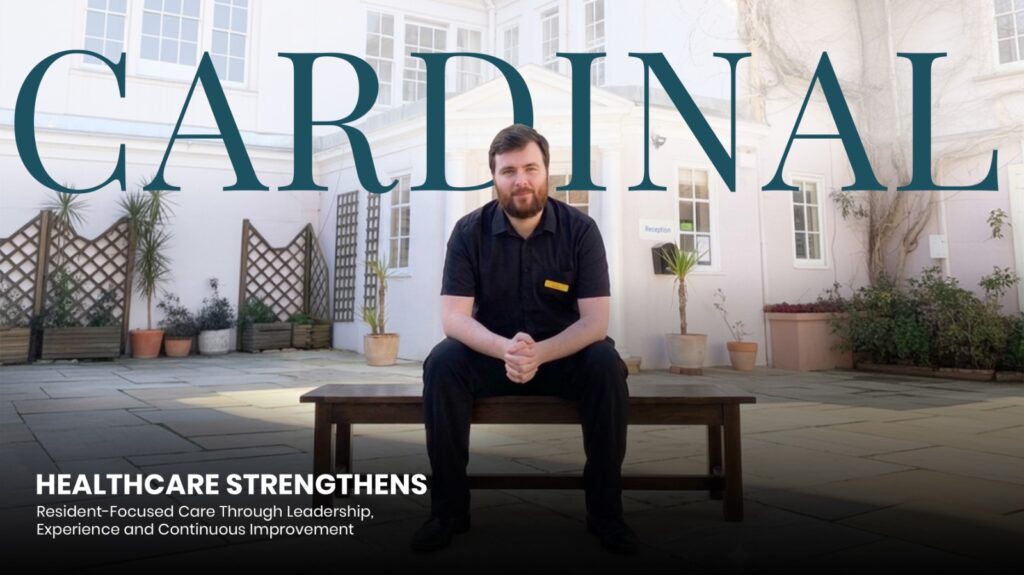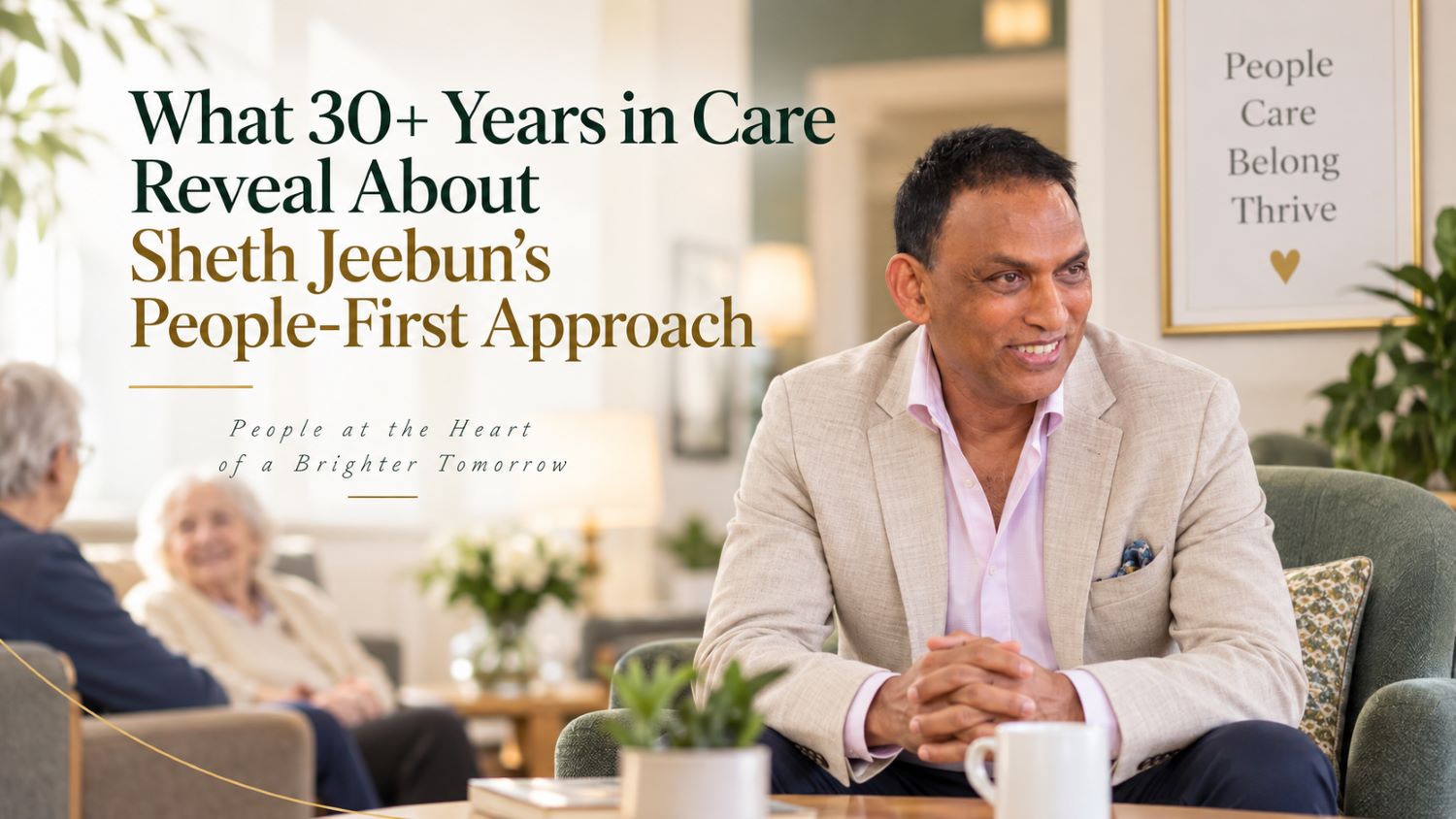

A care home is both a healthcare setting and someone’s home.
That simple fact can easily become lost when conversations about adult social care focus only on staffing, compliance, funding and operational performance.
For Sheth Jeebun, the public vision associated with Cardinal Healthcare places a strong emphasis on creating environments in which comfort, dignity, professional support and individual wellbeing come together.
That philosophy reflects lessons from a career in healthcare extending over more than three decades.
Why the Idea of “Home” Matters
Moving into residential or nursing care can represent one of the biggest transitions in a person’s life.
People leave familiar surroundings.
Daily routines change.
Independence may become more limited.
New relationships need to be formed with care staff.
For these reasons, good elderly care cannot be defined only by whether clinical needs are met.
Residents also need belonging, familiarity and emotional security.
Cardinal Healthcare’s public communication repeatedly refers to creating environments that feel like genuine homes while providing professional care.
This distinction is important.
The best care setting should not make someone feel that their identity disappeared when their care needs increased.
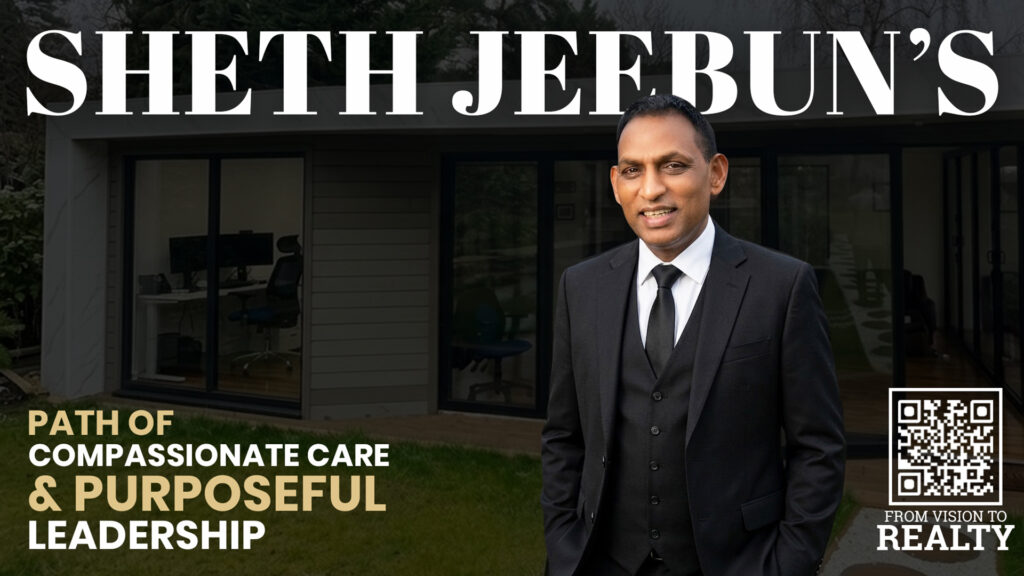
Sheth Jeebun’s Healthcare Foundation
Jeebun’s involvement with Cardinal Healthcare follows decades of experience across nursing and elderly-care services.
His public profile describes more than 30 years of healthcare and care experience, while Vayu Earth’s official team information notes his previous involvement in establishing five nursing homes for elderly residents.
That history helps explain why his current leadership narrative continues to revolve around individual wellbeing rather than healthcare administration alone.
Someone who has worked close to care delivery sees the consequences of management decisions differently.
Staffing is not merely a workforce metric.
Training is not merely a compliance requirement.
Facilities are not simply assets.
Each can influence how safe, respected and comfortable a resident feels.
Personalised Support Instead of Standardised Living
Consistency is important in healthcare, but people themselves are not standardised.
Every resident arrives with a different life story.
One person may value quiet routines.
Another may enjoy regular social interaction.
Some residents require nursing support.
Others may be living with dementia or more complex health needs.
Good care systems therefore need consistent professional standards while leaving enough flexibility to recognise individual preferences.
This is the practical meaning of personalised care.
It is not simply adding someone’s name to a care plan.
It involves understanding the person behind the plan.
Dementia Care Requires More Than Supervision
Dementia care illustrates this particularly clearly.
A person living with dementia may experience changes in memory, communication, orientation or behaviour.
An unfamiliar environment can increase anxiety.
Consistency, calm communication and familiarity can therefore become especially important.
Cardinal Healthcare publicly identifies specialist nursing and dementia care among the areas connected with its work.
From a leadership perspective, supporting residents living with dementia requires more than having appropriate facilities.
Teams need knowledge, patience and the ability to interpret behaviour compassionately.
The question changes from “What is this resident doing?” to “What might this resident be communicating?”
That difference can transform the quality of care.
The Importance of Professional Teams
No healthcare leader can personally deliver every resident’s daily care.
This means an organisation’s culture has to travel through its workforce.
Recruitment matters.
Training matters.
Supervision matters.
Communication between shifts matters.
And employees need to understand why certain standards matter rather than simply being told what procedures to follow.
Jeebun’s public leadership message around Cardinal Healthcare emphasises experienced, friendly and professional staff alongside compassion and dedication.
The quality of the resident experience ultimately depends heavily on whether those principles become visible in everyday staff behaviour.
Balancing Care and Operational Reality
Running a healthcare organisation involves unavoidable operational pressures.
Care providers need to manage budgets, staffing, buildings, regulation, supplies and changing resident needs.
Jeebun has spoken publicly about funding and accountability challenges within care and the difficulty of managing increasing expectations within financial constraints.
This creates a fundamental leadership challenge.
An organisation cannot ignore financial sustainability.
But it also cannot allow financial management to become detached from the people affected by those decisions.
Responsible healthcare leadership therefore involves continually balancing operational reality with care quality.
Listening Is Part of Care
Residents and families can provide information that management reports cannot.
They know whether communication feels clear.
They know whether concerns are being addressed.
They notice whether routines are respected.
And staff themselves often identify practical problems before senior leaders see them through formal reporting.
A strong care organisation therefore needs mechanisms that allow concerns and ideas to travel upwards as well as instructions to travel downwards.
Listening should not be treated as an optional customer-service exercise.
In care, it can be part of quality assurance.
Leadership and Continuous Improvement
No care organisation should assume that its work is finished.
Residents change.
Regulations evolve.
Staff join and leave.
New evidence emerges.
Technology develops.
Expectations rise.
Continuous improvement is therefore essential.
Experienced leaders may have substantial knowledge, but the strongest use of experience is not assuming that previous approaches will always remain sufficient.
It is using the past to make better decisions about the future.
Sheth Jeebun’s Wider Leadership Philosophy
Cardinal Healthcare represents one part of Jeebun’s wider public portfolio.
His work has also expanded into sustainability, community empowerment and ethical enterprise.
At first, these areas may appear unrelated.
But there is a common thread.
Healthcare asks how organisations affect vulnerable people.
Ethical business asks how organisations affect employees, suppliers and communities.
Sustainability asks how decisions affect future generations and the environment.
Each is ultimately a question of responsibility.
Final Thoughts
Sheth Jeebun’s association with Cardinal Healthcare reflects a vision of elderly care in which professional standards and human experience need to coexist.
Residents require appropriate healthcare support.
But they also need respect, familiarity, dignity and a sense of belonging.
Teams require clear systems.
But they also need leadership that understands the importance of the work they perform.
And organisations need to remain financially and operationally sustainable without forgetting why care services exist in the first place.
That balance may be difficult, but it is central to meaningful long-term care.