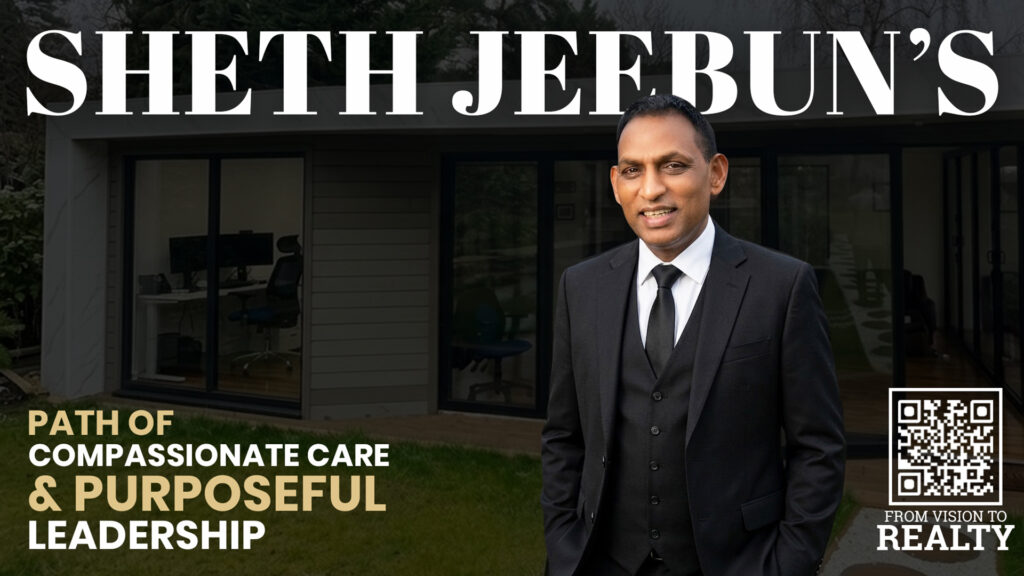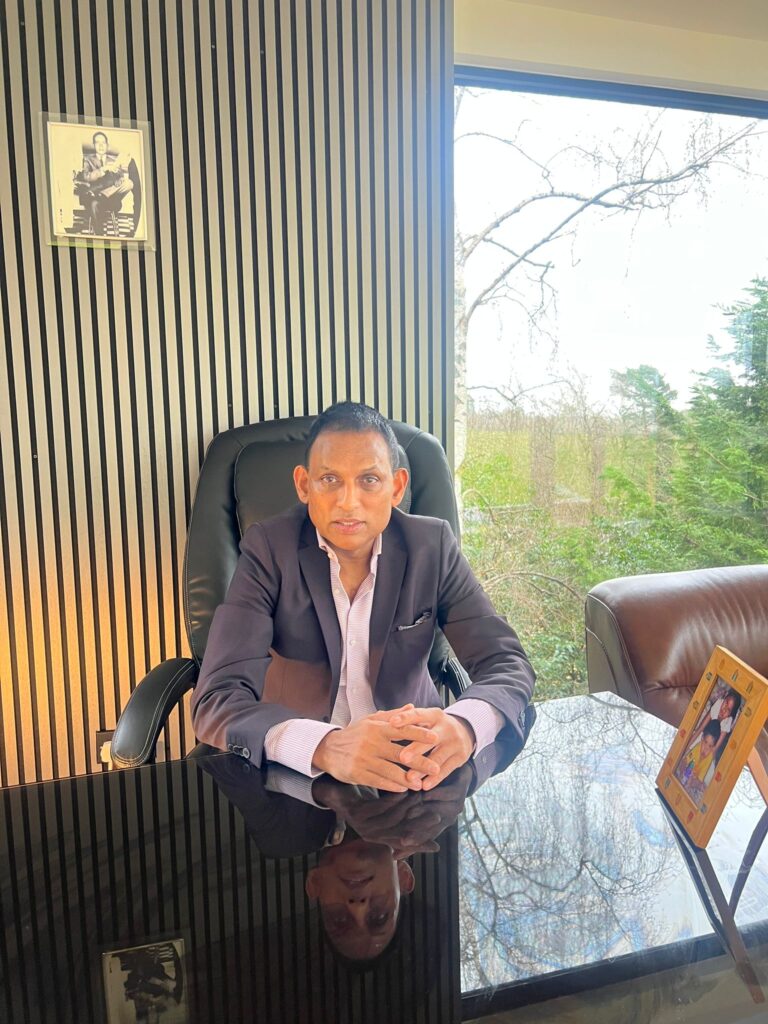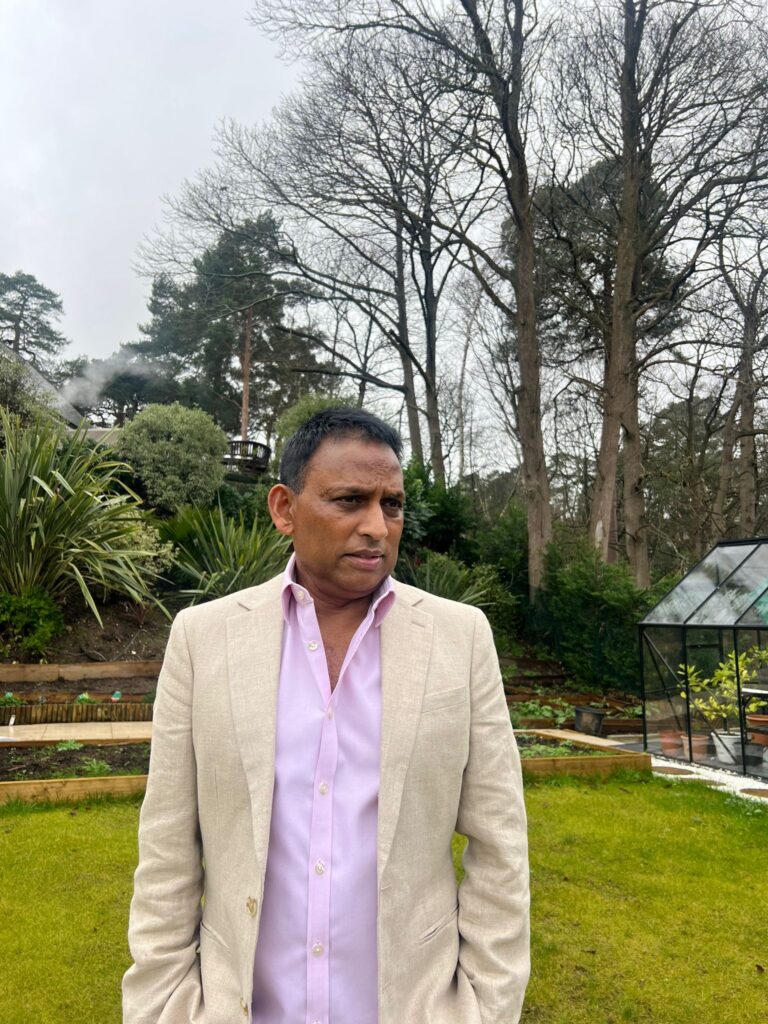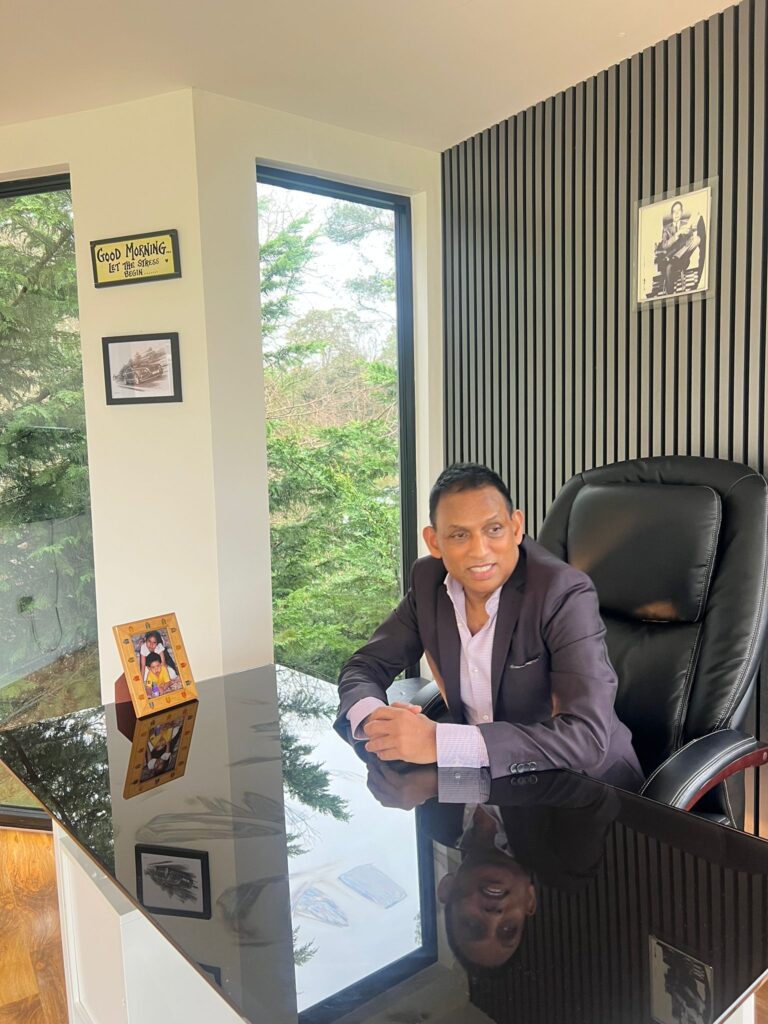
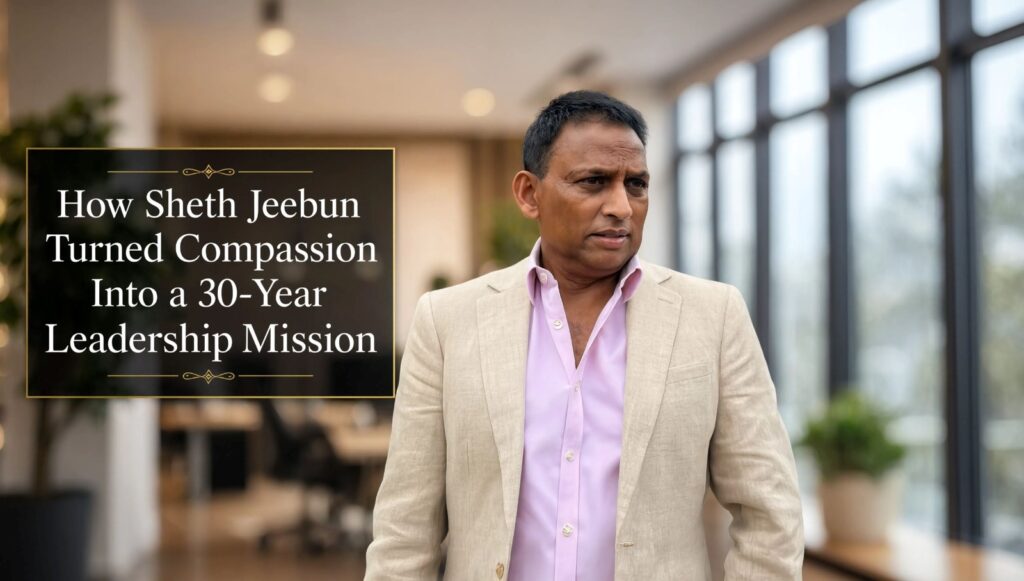
Some leaders build their reputation through rapid expansion. Others become known for financial performance, technology or innovation. Sheth Jeebun’s professional journey is distinctive because its foundations can be traced back to something more personal: caring for people.
For more than three decades, Jeebun has worked across nursing, elderly care, healthcare management, organisational leadership and sustainable enterprise. Throughout those changes, compassion has remained an important part of his professional outlook.
His career shows how the values associated with frontline healthcare can develop into a wider philosophy of leadership.
Care, in this context, is not simply an activity performed by nurses. It becomes a way of thinking about employees, residents, customers, communities and the long-term impact of business decisions.
Healthcare as the Starting Point
Sheth Jeebun’s professional journey began when he entered nursing in the late 1980s.
This gave him direct experience of working with people who depended on healthcare professionals for support, reassurance and treatment.
Nursing also provided exposure to the emotional side of healthcare.
Patients and families do not experience healthcare simply through procedures. They experience it through conversations, trust, uncertainty and the way professionals respond when people feel vulnerable.
This helped establish an early understanding of the importance of compassionate care.
As Jeebun’s career developed, he moved into elderly and residential care, where dignity and independence became especially important concerns.
Understanding the Needs of Older People
Elderly care requires a particularly thoughtful form of leadership.
Residents may be living with physical health conditions, dementia, reduced mobility or increasing dependence on others.
At the same time, they remain individuals with preferences, relationships, memories and established ways of living.
A high-quality care environment should therefore avoid reducing people to their medical needs.
Jeebun’s approach has consistently reflected person-centred principles.
This means understanding residents individually and recognising that quality of life depends on more than safety.
Choice, comfort, familiarity, social connection and meaningful daily activity can all contribute to wellbeing.
Developing Nursing and Residential Care Services
Over the years, Sheth Jeebun became involved in the establishment and management of multiple residential and nursing facilities.
This marked an important development in his career.
He was no longer dealing only with individual clinical responsibilities. He was helping shape the organisations responsible for delivering care.
Managing healthcare facilities requires a balance between compassion and structure.
Residents need personalised support, but organisations also need clear procedures, trained staff, quality monitoring, regulatory compliance and financial sustainability.
Leadership therefore becomes the bridge between human needs and operational requirements.
Cardinal Healthcare and Long-Term Strategy
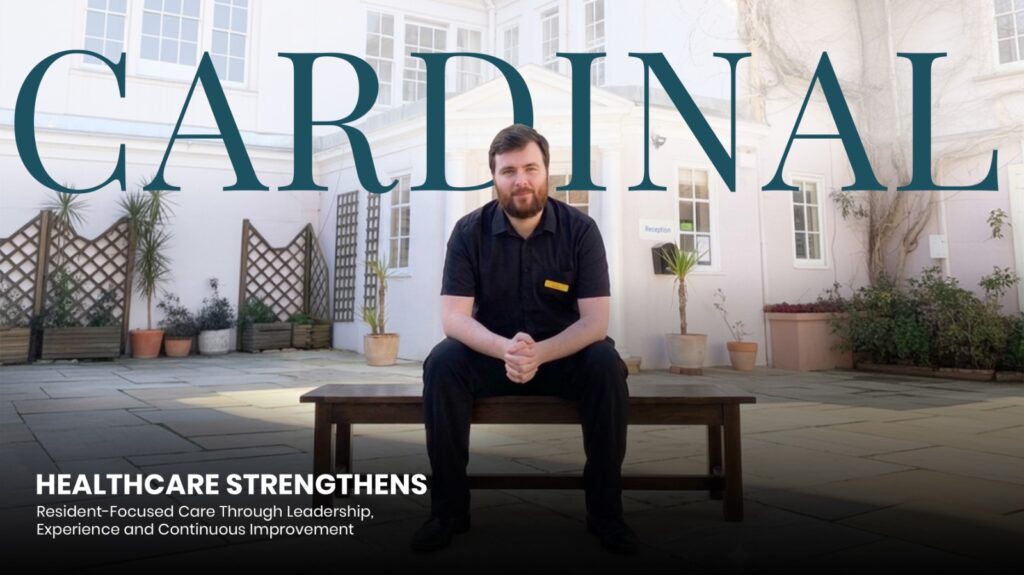
Sheth Jeebun’s work is now closely associated with Cardinal Healthcare.
The organisation’s development reflects his long-term involvement in UK healthcare and specialist care services.
Within this environment, his leadership has involved not only day-to-day operational matters but also wider strategy.
Healthcare leaders need to consider how care models will develop, what staff will require, how technology should be used and how residents’ expectations may change.
An ageing population and growing awareness of dementia have made specialist elderly care increasingly important.
This means organisations need to prepare not simply for today’s needs but for the future of care.
Why Dignity Matters
One of the strongest ideas within Jeebun’s healthcare philosophy is dignity.
The need for support should never remove a person’s identity.
Someone entering a care home may require significant assistance, but they still have preferences about food, clothing, activities, personal space and relationships.
Respecting these choices can help preserve independence.
Dignity also influences the way staff communicate.
A resident should feel included in decisions rather than being treated as someone around whom decisions are simply made.
This distinction can fundamentally change the experience of care.
Dementia and Personalised Support
Dementia care provides a powerful example of why person-centred thinking matters.
Two individuals with dementia may have very different needs.
One person may respond positively to music or familiar routines, while another may require more reassurance, quiet spaces or structured activities.
Understanding this requires staff to know residents as people.
Their life history can become relevant to their care.
Information about past occupations, family relationships, interests and daily habits may help staff communicate more effectively and create experiences that feel familiar.
Jeebun’s broader philosophy supports this more individual approach.
Leadership Through Stronger Teams
A healthcare leader can create policies and strategies, but employees are the people who turn them into everyday experiences.
This is why staff development plays such an important role in Jeebun’s approach.
Carers and nurses need technical knowledge, but they also need communication skills, confidence and emotional awareness.
Managers need to provide guidance while maintaining accountability.
Strong healthcare teams are built when individuals understand both what they need to do and why it matters.
An organisation with excellent facilities but poor culture may struggle to deliver genuinely high-quality care.
By contrast, a supportive and responsible team can improve even ordinary daily interactions.
Technology Without Losing Humanity
Healthcare technology has advanced considerably since Sheth Jeebun began his career.
Digital records, care-management platforms and communication systems can now support more efficient services.
Jeebun’s professional interests have included modernisation and the use of improved systems within care environments.
Digitisation can make information more accessible, reduce duplication and support more effective personalised planning.
But technology should remain a tool.
A care-management system can remind staff about a resident’s needs, yet it cannot replace compassionate interaction.
The challenge for modern healthcare leaders is therefore to combine efficiency with humanity.
Extending Purpose Into Sustainable Enterprise
Jeebun’s career eventually expanded into an area that may initially appear separate from healthcare: sustainability.
Through his association with Vayu Earth, his leadership interests extended into ethical production, traditional craftsmanship and artisan communities.
The connection becomes clearer when viewed through the idea of responsibility.
Healthcare requires responsibility toward residents.
Sustainable business requires responsibility toward producers, communities and the environment.
Both involve thinking about who is affected by organisational decisions.
Economic Opportunity and Traditional Craftsmanship
Vayu Earth has focused attention on skilled artisans and the possibility of creating access to broader markets for handmade products.
Women in rural communities form an important part of this vision.
Traditional craftsmanship often depends on specialist knowledge passed between generations. Yet without sustainable economic opportunities, these skills can become difficult to maintain.
Responsible enterprise can help create a bridge between traditional production and contemporary markets.
When structured thoughtfully, such models can contribute to income generation while preserving cultural value.
Business With a Social Dimension
This work connects with Jeebun’s wider interest in community and social responsibility.
The modern definition of leadership is becoming broader.
Customers, employees and communities increasingly expect organisations to think about their social and environmental impact.
Jeebun’s professional profile reflects this shift.
His work suggests that commercial success and social responsibility do not have to exist separately.
A business can pursue growth while also asking whether its decisions improve opportunities, support communities and use resources responsibly.
The Meaning of Purpose-Driven Leadership
Purpose-driven leadership can easily become a marketing phrase. Its real meaning depends on how consistently values influence decisions.
In Sheth Jeebun’s career, the connecting themes are visible across different sectors.
His nursing background placed people at the centre of care.
His healthcare leadership required him to create organisations capable of delivering that care.
His approach to staff emphasised the importance of people within the organisation.
His sustainability work expanded responsibility to communities and producers outside traditional healthcare.
This creates a broader interpretation of leadership based on impact.
A Career That Continues to Evolve
More than three decades after entering healthcare, Sheth Jeebun’s professional interests are wider than they were at the beginning.
Healthcare remains a major part of his identity, particularly elderly and specialist care.
However, sustainability, ethical enterprise and social impact now form part of the same wider story.
The ability to evolve is important in leadership.
Industries change. Technology develops. Expectations increase.
The values that guide decisions, however, can remain consistent.
Conclusion
Sheth Jeebun’s professional journey shows how compassion can develop from an individual healthcare value into a long-term leadership philosophy.
His career began with direct patient care and expanded into nursing-home management, healthcare strategy and organisational development.
Through Cardinal Healthcare, his work has continued to emphasise person-centred care, dignity, strong teams and quality.
Through Vayu Earth and related interests, his attention has extended toward sustainability, ethical production and artisan opportunity.
These different areas are connected by a simple principle: leadership should consider people.
Residents matter. Employees matter. Communities matter. Producers matter. Long-term impact matters.
That approach has helped shape more than three decades of Sheth Jeebun’s professional development and explains why care, purpose and responsibility remain such important themes within his leadership story.